
Guide
What is vertical farming?
Vertical farming grows crops in stacked layers, usually indoors, under artificial light and controlled climate.
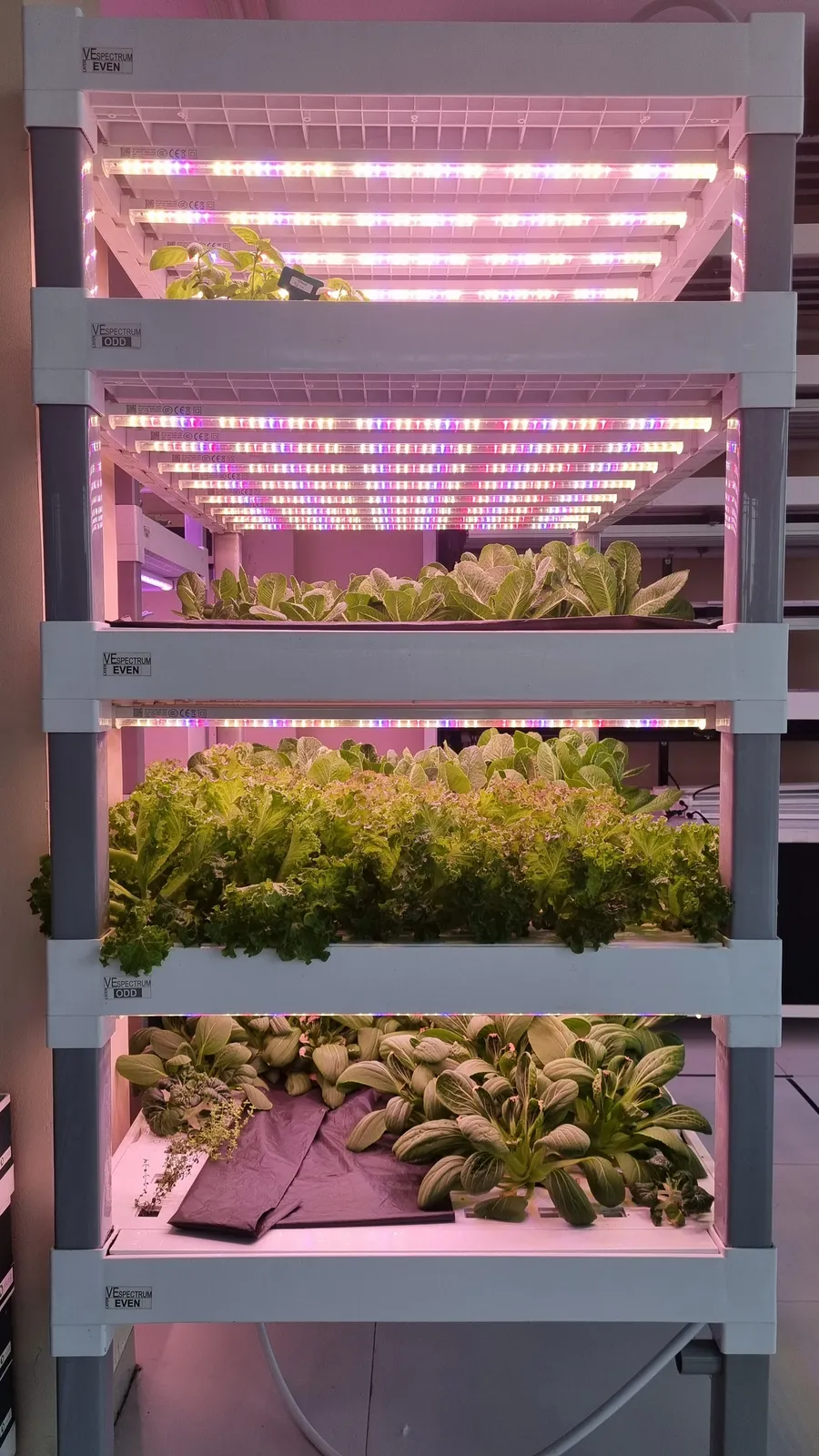
The idea
Instead of spreading plants across a field, a vertical farm stacks them. Each layer gets its own lighting, and the whole space is climate-controlled. Plants usually grow hydroponically, with roots fed by nutrient-rich water instead of soil.
Advantages
- Much more food per square metre of floor.
- Year-round harvests, independent of weather and seasons.
- No pesticides needed when pests are kept out.
- Recirculating water uses a fraction of field irrigation.
- Farms can sit in cities, close to consumers.
Trade-offs
- Electricity for lighting and climate control.
- Upfront equipment cost.
- Best suited to fast, compact, high-value crops such as leafy greens and herbs.
Warehouse vs modular
Many vertical farms are big warehouses. Akar took a modular route instead: small, stackable units placed directly in shops, hotels, kitchens and homes and rented as a service. See why modular.
Related
Rental Sekarang
Ready to grow your own food?
Tell us where you would like an Akar unit, what you want to grow and who will eat it. We will get back to you by email.